The difference between the silty sands around Burnett Heads and the stiff clays near Gin Gin is night and day when you are designing a pavement. In our lab, we see it every week: the CBR value for the coastal sands might sit around 15 to 20, while those dark clay flats inland can drop to 3 or 4 after soaking. That is why running a proper laboratory CBR test on undisturbed or recompacted samples from your specific site in Bundaberg is the only reliable way to set subgrade strength parameters. We follow AS 1289.6.1.1 to the letter, soaking samples for four days when required, then measuring the penetration resistance at 2.5 mm and 5.0 mm. It is a straightforward method, but the results directly govern your pavement thickness design.
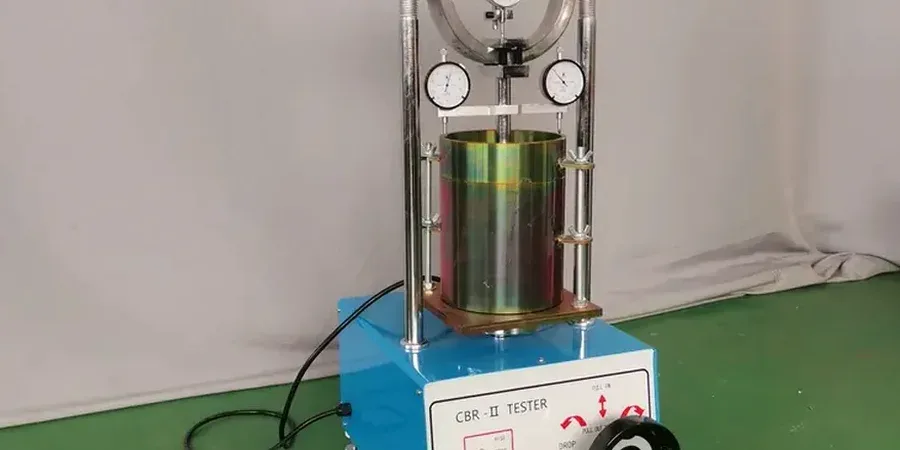
For Bundaberg's variable alluvial and basaltic subgrades, a single CBR value can be misleading. We test multiple samples per lot.
Methodology applied in Bundaberg
Typical technical challenges in Bundaberg
AS 1289.6.1.1 is the relevant standard, and it matters here because Bundaberg sits in a region with high seasonal rainfall — the subgrade can go from dry to saturated in hours. A soaked CBR test replicates that worst-case condition. If the lab results show a soaked CBR below 5, the pavement design needs a stabilised subbase or a thicker granular layer to avoid rutting. We have seen roads near the Burnett River fail within two years because the design assumed a dry CBR of 10, but the actual soaked value was 3. The cost of resurfacing dwarfs the price of getting it right in the lab first.
This service complements our laboratory testing work for a complete project analysis.
Our services
We offer two main testing options depending on your project stage and sample condition.
Soaked CBR on recompacted samples
For pavement design where the subgrade will be compacted to a target density. We prepare the sample at optimum moisture content (standard or modified Proctor), compact it into the mould, soak it for four days, and then run the penetration test. The report gives the corrected CBR at 2.5 mm and 5.0 mm penetration.
Unsoaked CBR on undisturbed samples
When you need the in-situ strength for an existing subgrade or a thin pavement with good drainage. The sample is trimmed from a block or tube, loaded directly without soaking, and tested at natural moisture content. This option is faster and suits dry-season assessments in Bundaberg's coastal areas.
Quick answers
What is the difference between soaked and unsoaked CBR for Bundaberg subgrades?
Soaked CBR simulates the worst-case scenario after heavy rain — typical for Bundaberg's wet season. Unsoaked CBR gives the strength at natural moisture content. For pavement design, soaked CBR is the conservative choice, especially on clay subgrades that lose strength when wet.
How much does a laboratory CBR test cost in Bundaberg?
The typical range is between $170 and $310 per sample for a standard soaked CBR with Proctor compaction. The price varies with sample preparation (undisturbed vs. recompacted) and whether you need a full compaction curve beforehand.
What sample size do I need to send to the lab?
For a recompacted CBR test we need about 25 kg of disturbed soil. For undisturbed testing, a block sample of 200 mm x 200 mm x 200 mm or a 150 mm diameter tube works. It is always best to call ahead so we can confirm the container and transport requirements.
How long does the test take from sample delivery?
A standard soaked CBR takes five working days: one day for compaction and four days for soaking, then the penetration test on day five. Unsoaked tests are faster — typically two to three days. Rush turnaround is possible with prior arrangement.