Bundaberg sits on the Burnett River floodplain with elevations barely 15 meters above sea level, meaning the subsurface is dominated by alluvial clays and sands that can shift dramatically within a single building lot. For projects requiring reliable consolidation, shear strength, or permeability data, standard disturbed samples simply won't do. We extract undisturbed samples using thin-walled Shelby tubes that preserve the in-situ fabric and moisture content of the soil — essential data when you're designing foundations for the soft estuarine deposits common near the river mouth. Before mobilizing the Shelby tube, we often run a borehole log to map the stratigraphy and decide exactly which depths justify the extra care of undisturbed sampling.
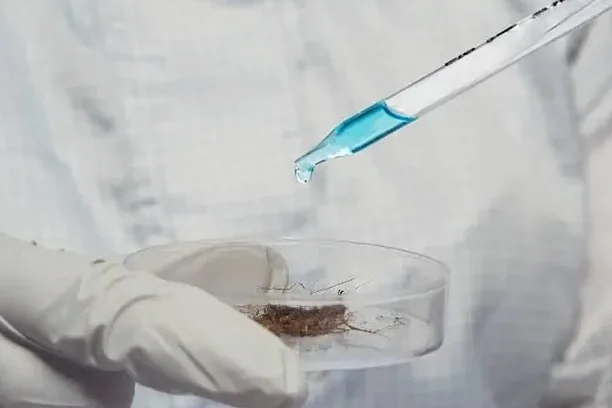
A Shelby tube sample preserves the exact moisture and fabric of Bundaberg's alluvial clays — without it, consolidation parameters are just guesses.
Methodology applied in Bundaberg
Working video
Typical technical challenges in Bundaberg
Compare the alluvial flats along the Burnett River with the elevated lateritic ridges around Bargara — the undrained shear strength in the river clays can be half of what you'd find just 6 km east. An undisturbed sample from the river zone might show Su below 25 kPa, while the ridge material can exceed 80 kPa. If your project straddles both units and you rely on disturbed samples alone, you risk differential settlement that no fill adjustment can fix. That's why we insist on paired Shelby tube samples at every transition boundary, especially when the geotechnical report will feed into a raft or pile design.
This service complements our laboratory testing work for a complete project analysis.
Our services
Our Bundaberg laboratory provides the full chain of undisturbed sampling services, from field extraction to final test reporting.
Shelby Tube Field Sampling
Mobilisation of our truck-mounted hydraulic push rig to your Bundaberg site. We run 50 mm and 75 mm tubes to depths up to 15 m, sealed on site and logged with recovery ratios. Each sample is assigned a unique ID and chain-of-custody form for NATA-accredited testing.
Lab Trimming & Index Testing
Extrusion, trimming, and moisture content determination within 4 hours of arrival. We photograph the undisturbed fabric, run classification tests (Atterberg limits, particle density), and prepare specimens for triaxial or oedometer testing per project specs.
Quick answers
What is the maximum depth for Shelby tube sampling in Bundaberg?
We typically reach 15 m with our hydraulic push rig, though the stiff clay layers near the Burnett River often limit recovery beyond 12 m. Deeper targets may require a rotary core barrel first, then a Shelby tube at the base of the borehole.
How much does undisturbed sampling with Shelby tubes cost in Bundaberg?
The typical cost for a single Shelby tube sample (field push, sealing, transport, and basic index testing) ranges from AU$710 to AU$1,440 depending on depth, access, and number of samples per borehole. Volume discounts apply for multi-location projects.
What tests can be run on an undisturbed Shelby tube sample?
Common tests include oedometer consolidation (to measure pre-consolidation pressure and Cv), unconsolidated undrained triaxial (UU), and direct shear on the preserved fabric. All tests are performed in our Bundaberg lab under AS 1289 and NATA accreditation.
How long can a Shelby tube sample be stored before testing?
Sealed tubes can be stored up to 14 days at 4–10 °C without significant moisture loss. Beyond that, the wax seal may degrade and the sample should be extruded and wrapped in cling film and aluminium foil. We always prioritise extrusion within 48 hours for critical consolidation tests.