Geotechnical laboratory testing in Bundaberg encompasses a comprehensive suite of procedures designed to quantify the physical, mechanical, and hydraulic properties of soil and rock materials. These controlled-environment analyses move beyond field observations to deliver the precise parameters required for foundation design, earthwork specifications, and long-term infrastructure performance. In a region where residual basaltic clays and alluvial deposits dominate the landscape, understanding the difference between a stable foundation and a structurally compromised one often begins with a meticulous laboratory programme. The data generated from tests such as Atterberg limits and oedometer consolidation form the backbone of safe, cost-effective engineering decisions.
Bundaberg's geological setting is heavily influenced by the Burnett River floodplain and ancient volcanic activity, resulting in a complex stratigraphy of Quaternary alluvium overlying deeply weathered basalts. These conditions produce reactive clay soils with high plasticity, which are prone to significant shrink-swell movements with seasonal moisture changes. Laboratory characterisation becomes essential to quantify parameters like liquid limit, plasticity index, and clay mineral activity. Furthermore, the region's sugarcane and macadamia processing industries demand robust civil infrastructure, from storage sheds to effluent ponds, where soil behaviour under load and saturation must be predicted with confidence. A thorough soil mechanics study integrates these site-specific geological nuances with standardised testing protocols.
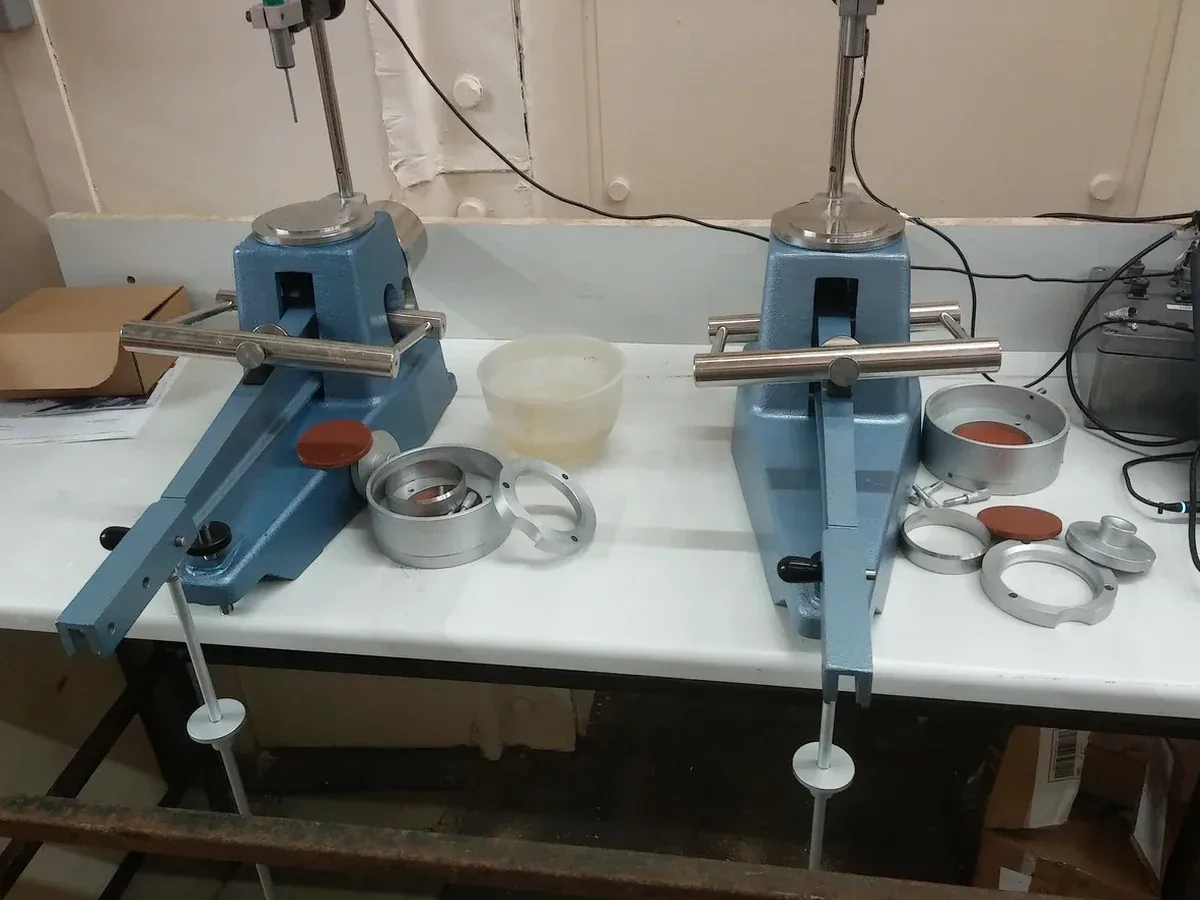
Australian geotechnical laboratory practice is governed by the AS 1289 series of standards, which prescribe methods for sample preparation, testing procedures, and reporting. These standards ensure consistency and comparability of results across different laboratories, whether you are evaluating fill compaction using a Proctor test (Standard or Modified) or determining the bearing capacity of a subgrade via the laboratory CBR test. NATA accreditation, or equivalent technical competence, is also a critical requirement for any laboratory engaged in major infrastructure projects, guaranteeing that quality control systems and equipment calibration meet national benchmarks. Adherence to these frameworks is non-negotiable for certifying materials for use in roads, bridges, and residential developments.
The range of projects in Bundaberg that demand rigorous laboratory input is extensive. Residential subdivisions on the city's expanding fringes require shrink-swell classification to prevent slab heave, while commercial developments near the river need consolidation data to estimate settlement on soft alluvial clays. Infrastructure upgrades, including road widenings and new bridge abutments, rely on strength and stiffness parameters from triaxial and CBR testing. Even agricultural engineering projects, such as on-farm water storages, benefit from laboratory permeability tests to design effective liners or assess seepage losses. A complete understanding of material behaviour, from grain size distribution to shear strength, transforms geotechnical risk into manageable design inputs.
Available services
Atterberg limits
→ Ver detalleGrain size analysis (sieve + hydrometer)
→ Ver detalleLaboratory CBR test
→ Ver detalleLaboratory permeability test (falling/constant head)
→ Ver detalleOedometer consolidation test
→ Ver detalleProctor test (Standard or Modified)
→ Ver detalleResidual soil characterization
→ Ver detalleSoil mechanics study
→ Ver detalleTriaxial test
→ Ver detalleUnconfined compression test (UCS)
→ Ver detalleQuick answers
Why is laboratory soil testing considered essential before construction in Bundaberg?
Laboratory testing provides precise, quantitative data on soil properties that field observations alone cannot offer. In Bundaberg, reactive clays and alluvial soils exhibit variable behaviour under load and moisture changes. Tests for plasticity, consolidation, and shear strength are essential to predict foundation movement, pavement deformation, and earthwork performance, enabling engineers to design safe and durable structures tailored to local ground conditions.
What Australian standards apply to geotechnical laboratory testing?
The primary framework is the AS 1289 series, which covers methods for soil testing, including sample preparation, compaction, classification, and strength tests. Laboratories performing tests for construction projects must also demonstrate NATA accreditation to ensure technical competence, equipment calibration, and quality control procedures meet national benchmarks, guaranteeing reliable and legally defensible results.
How do I know which laboratory tests are required for my project?
The required suite of tests depends on your project type, site geology, and design objectives. A residential slab may need Atterberg limits and shrink-swell indices, while a road project requires CBR and compaction tests. A geotechnical engineer interprets the site investigation data and specifies the appropriate laboratory program to address specific risks, such as settlement, slope stability, or reactive soil movement.
What is the difference between standard and modified Proctor compaction tests?
Both tests determine the maximum dry density and optimum moisture content of a soil, but they apply different compactive efforts. The modified Proctor uses a heavier hammer and greater drop height, simulating heavier modern compaction equipment. The standard Proctor replicates lighter compaction. The choice depends on the project specification and the intended use of the fill material, as defined by AS 1289.