A common mistake we see in Bundaberg projects is treating residual soil like any other fill. Builders assume it compacts uniformly or drains predictably. That assumption costs time and money. Residual soils here form directly from weathered volcanic rock. They keep the parent rock's structure but lose strength when disturbed. If you strip vegetation and start excavation without testing, you risk differential settlement. A proper characterization identifies weak zones before concrete is poured. It also helps avoid over-designing footings for soil that actually holds. Before any earthmoving, we recommend combining visual classification with a compression test to establish baseline strength. This step alone prevents many callbacks in Bundaberg's humid climate.
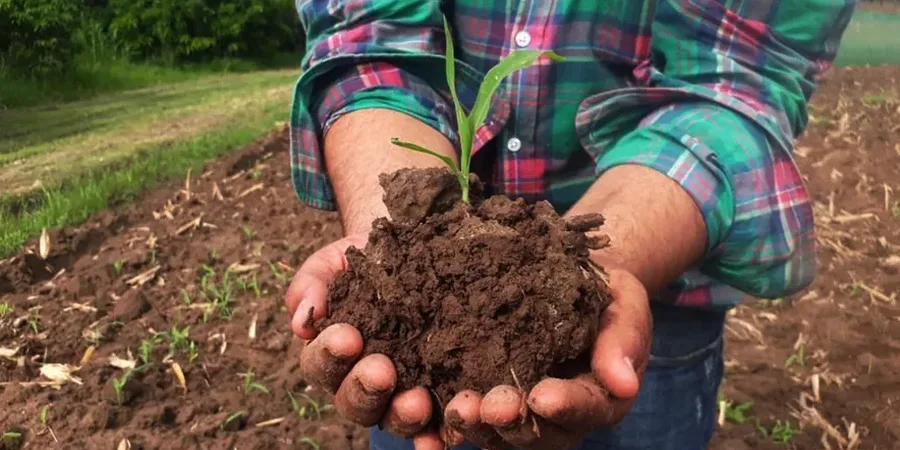
Residual soil in Bundaberg can lose 60% of its bearing capacity when saturated – testing before rain is not optional.
Methodology applied in Bundaberg
Typical technical challenges in Bundaberg
In Bundaberg, we often see projects where the builder tests only the top metre. They assume deeper soil is similar. Residual profiles invert that logic. The strongest layer may sit one metre down, but below that, partially weathered rock can collapse when loaded. Another pattern: after heavy rain, residual clay swells and cracks foundations that looked fine in dry weather. That's not a construction defect — it's a characterization gap. We always insist on sampling at multiple depths, especially where the water table fluctuates. Our team flags high-plasticity zones early so the design team can adjust footing depth or recommend soil replacement before steel goes in.
This service complements our laboratory testing work for a complete project analysis.
Our services
We offer three core services for residual soil characterization in Bundaberg. Each is tailored to the local geology and project scale.
Field Classification & Logging
On-site logging per AS 1726 by experienced geotechnicians. We record colour, structure, moisture, and consistency at 0.5m intervals. Includes photographic record and bulk sampling for lab dispatch.
Laboratory Index Testing
Full suite: moisture content, Atterberg limits, particle size distribution, and shrinkage index. All tests follow AS 1289 methods. Results used for reactivity classification and foundation design parameters.
Strength & Compressibility Testing
Unconfined compressive strength (UCS) and one-dimensional consolidation tests on undisturbed samples. Provides modulus and pre-consolidation pressure for settlement analysis in Bundaberg's residual profiles.
Quick answers
How much does residual soil characterization cost in Bundaberg?
Typical costs range between AU$1,180 and AU$4,860 depending on project size and number of test pits. A small residential lot with two pits and basic index testing sits near the lower end. A commercial site with deep boreholes and triaxial testing approaches the upper range. We provide fixed-price quotes after a quick site review.
What is the main difference between residual soil and transported soil in Bundaberg?
Residual soil sits directly above the parent rock it weathered from. It retains relict structures like joints and bedding planes, which can create weak slip surfaces. Transported soil (alluvium, colluvium) is re-deposited and usually more uniform. In Bundaberg, residual profiles often show abrupt changes in strength within one metre — something transported soils rarely do.
Do I need characterization if I am just building a shed or retaining wall?
Yes, especially if the soil contains high-plasticity clay. A small retaining wall loaded by reactive residual soil can tilt within months. Characterization gives you the shrinkage index and bearing capacity needed to size footings correctly.